
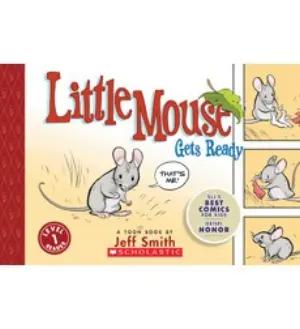
Ages 3-5
View on Amazon
Little Mouse Gets Ready
Jeff Smith
A short early-reader comic by Jeff Smith, creator of Bone, about a little mouse getting dressed.
Comics for three-to-five-year-olds are really early-reader and picture-led books. Here is what works, and how to read them together.
Most “comic books for a three-year-old” are early-reader comics: short panels, big pictures and a few simple words. Our catalog has five in the ages 3 to 5 band, including Little Mouse Gets Ready, Benny and Penny in the Big No-No!, Jack and the Box, Stinky and Luke on the Loose. They are small books, written to be shared with a grown-up.
A preschooler does not need to read the words. Pointing out each panel, doing the voices and letting the child say what happens next is how comics teach reading. Regular monthly comic books and long graphic novels are written for older children, so wait on those and start here.
Read the panels in order with your finger, and let your child tell you what is happening before you read the words.
The five early-reader comics in our catalog.
Jeff Smith
A short early-reader comic by Jeff Smith, creator of Bone, about a little mouse getting dressed.
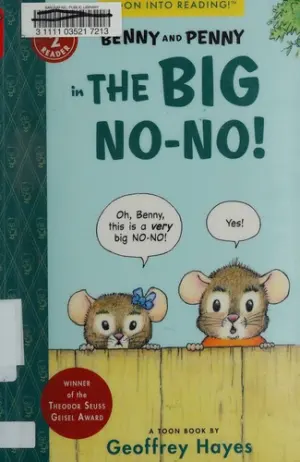
Geoffrey Hayes
An early-reader comic about the mouse siblings Benny and Penny, made for children learning to follow panels.
Art Spiegelman
An early-reader comic by Art Spiegelman, the creator of Maus, made for children's first comics.
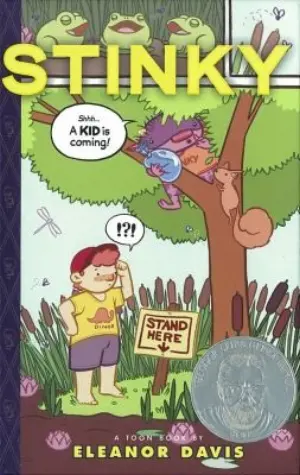
Eleanor Davis
A gentle early-reader comic about a swamp monster named Stinky.
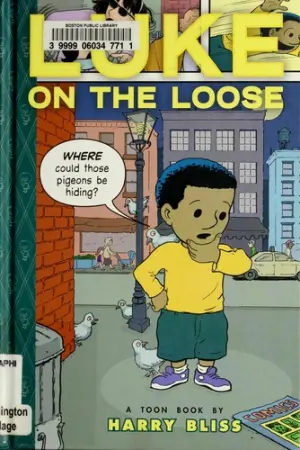
Harry Bliss
A short early-reader comic by the cartoonist Harry Bliss.
Amazon links are affiliate links; we may earn a commission on qualifying purchases at no extra cost to you. We show no prices or ratings.
These are all the ages 3 to 5 books we list.
There are early-reader comics that suit three-year-olds when a grown-up reads along: short panels, large pictures and few words. Our catalog lists five, including Little Mouse Gets Ready and Stinky. Standard comic books and long graphic novels are written for older children, so they are not the place to start with a three-year-old.
A picture book has art with a short text, usually read aloud. An early-reader comic uses panels and speech bubbles with simple words so a child can start reading. A graphic novel is a longer, book-length story in comic form, usually for older children. Preschoolers do best with picture books and early-reader comics.
Follow the panels in order with your finger, read the speech bubbles in different voices, and pause so your child can guess what happens next. Talk about what the pictures show. Comics ask a child to connect pictures, words and order, which is a useful early reading skill, and it is fun to do together.
They can be a helpful part of a mix. A child has to follow a sequence of pictures and connect them to words, and a funny story keeps them engaged. Comics work best alongside picture books and reading aloud, not instead of them. Choose books with simple words and very clear pictures.
When your child can read short sentences alone, funny series such as Dog Man, Babymouse or Squish are popular next steps, and our ages 6 to 8 picks list more. There is no rush. A child who enjoys being read to is already building the skills they will need for those books.