Browse our recommended products
Our featured picks refresh periodically. While we update them, our guides can help you find the right pick.
See all guidesWhy starting point matters more than "the best" comic
New readers often ask for "the best comic ever" as a starting point, but the more useful question is what kind of story you already enjoy. Someone who reads literary fiction will have a very different first experience with Maus than someone who wants a fast-paced space adventure and starts with Saga.
This guide is built around that idea: instead of one universal recommendation, it walks through formats, buying options, how to physically read a page, and a short list of accessible starting points sorted by taste rather than hype.
Understanding the formats you'll see
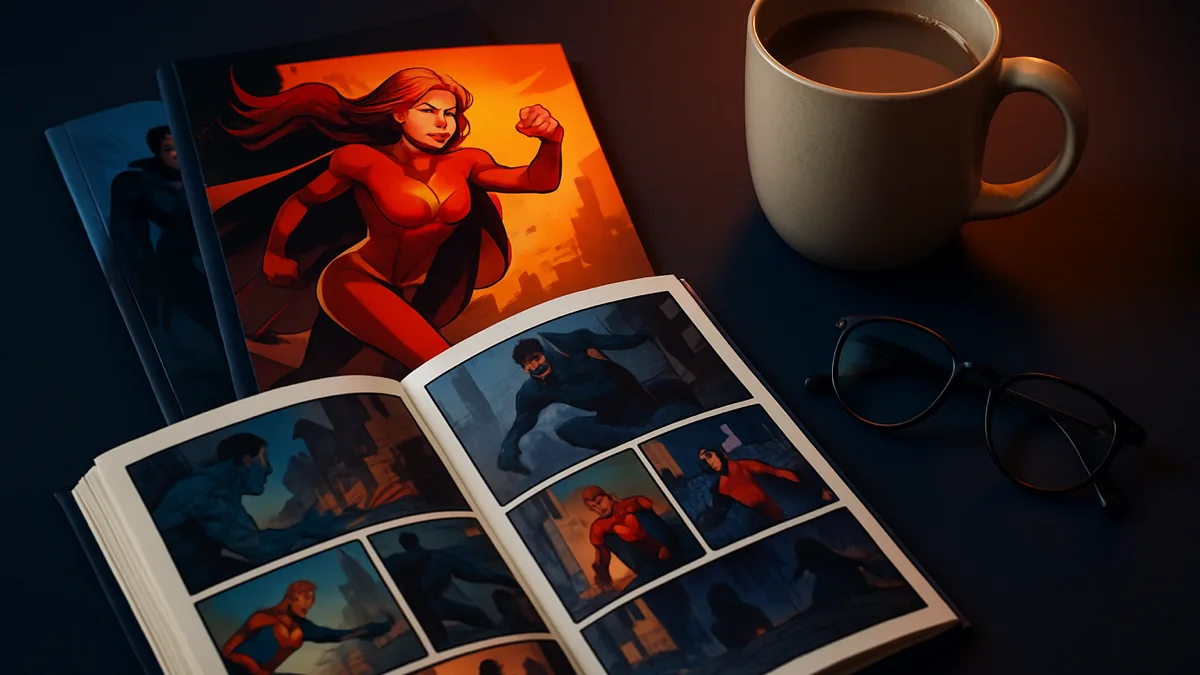
Single issues (sometimes called "floppies") are the traditional monthly pamphlet format, usually 20-32 pages, and are best for readers who want to follow a story in real time alongside a fan community.
Trade paperbacks collect several single issues into one softcover book, usually 4-6 issues, and are the most common way new readers experience an ongoing series without hunting down individual issues.
Original graphic novels are complete, standalone books published as one unit rather than serialized first; Nimona and Watchmen are both usually read this way even though Watchmen was originally serialized decades ago.
Omnibus and deluxe editions bundle large chunks of a series - sometimes an entire run - into a single hardcover, which is often the most cost-effective way to read a complete story once it has concluded.
Where new readers typically buy or borrow comics
Local comic shops carry both new single issues and back-catalog trade paperbacks, and many staff are used to walking in new readers based on a quick conversation about taste.
Public libraries carry a growing graphic novel and manga section, which is a low-risk way to sample a series before deciding whether to buy the next volume.
Online retailers, including Amazon, list current editions, formats, and availability for most in-print collected volumes and omnibuses, which is useful once you know which title or format you want.
Digital storefronts and subscription apps offer issue-by-issue or volume-by-volume digital reading, which can be a lower-commitment way to try a series before buying physical copies.
How to actually read the page
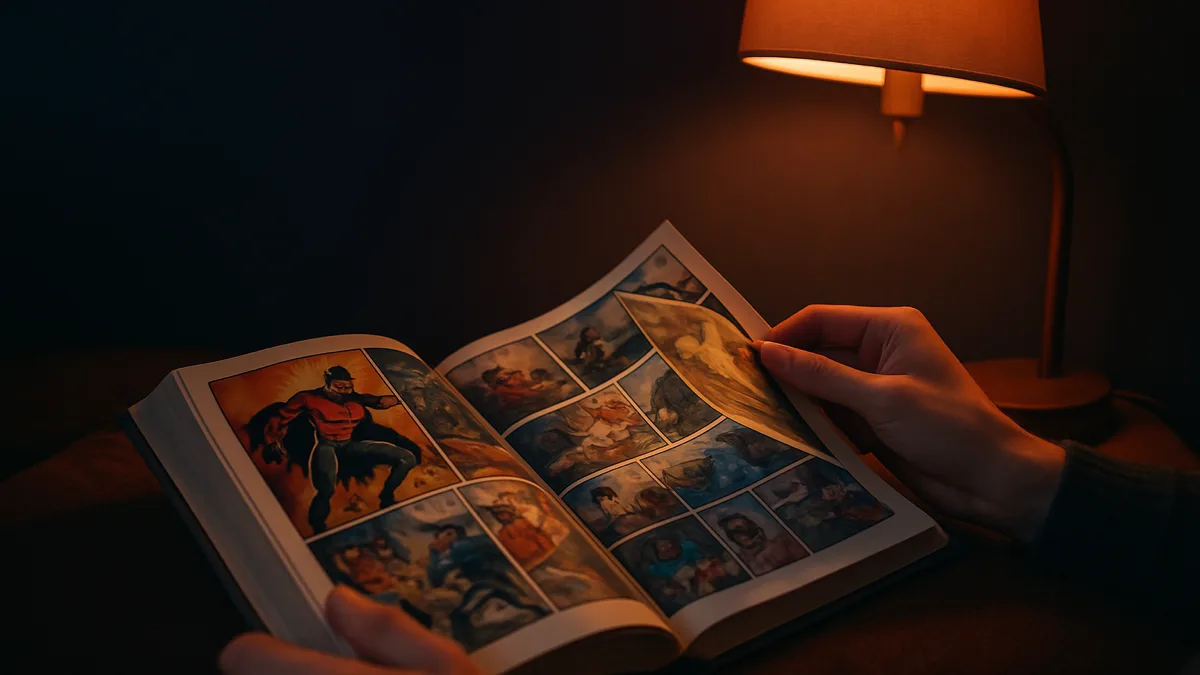
Comics are read left to right, top to bottom, the same as English prose, with each panel representing a moment in time rather than a fixed unit of duration - a panel can show an instant or several minutes, and pacing is set by panel size and the gutters (the space) between them.
Word balloons are generally read in the same left-to-right, top-to-bottom order as panels; when a page layout breaks that pattern (common in more experimental comics like parts of Watchmen or The Sandman), most readers slow down and follow the visual flow rather than a strict grid.
Captions (usually rectangular boxes) typically indicate narration or a different point in time than the panel itself, distinct from the rounded word balloons used for character dialogue.
Budgeting your first few purchases
A single new trade paperback typically costs less than a hardcover novel, and most acclaimed complete graphic novels stay in print for years, so there's rarely urgency to buy the moment you hear about a title.
If you're not sure comics are for you yet, borrowing from a library or reading a digital sample before buying is a reasonable way to test the format without committing to a purchase.
Secondhand copies of older, widely printed titles (Watchmen, Maus, and Bone all fall into this category) are commonly available through used bookstores and online marketplaces at a lower cost than new copies, since none of them are scarce or out of print.
Browse our recommended products
Our featured picks refresh periodically. While we update them, our guides can help you find the right pick.
See all guidesWhat to expect the first time you read a graphic novel
Your reading speed will likely feel unusually fast the first time, since you're processing images alongside text; many new readers worry they're "missing something" because a 200-page graphic novel can take less time to read than a 200-page prose novel. That's normal and doesn't mean you're reading it wrong.
It's common to flip back a page or two after finishing a chapter to re-examine art details you moved past quickly the first time - this is a normal part of how people read comics, not a sign you read too fast the first time.
If a page layout feels confusing, slowing down and tracing the panel borders with your eyes (rather than jumping straight to the text in each balloon) usually resolves the confusion, since most disorientation comes from misreading the intended panel order rather than the story itself.
Common misconceptions that stop people from starting
"Comics are only for kids" - many of the most acclaimed graphic novels (Maus, Watchmen, Fun Home) deal with serious adult subject matter and are shelved and marketed as adult or literary reading, not children's material.
"You have to catch up on decades of continuity" - this is true for some ongoing superhero universe titles, but every recommendation in this guide is specifically chosen because it doesn't require that kind of catch-up.
"Comics are a lesser or easier version of novels" - the format uses a different set of storytelling tools (panel pacing, visual composition, the interplay of image and text) rather than being a simplified version of prose fiction, and professional critics treat it as its own medium rather than a subset of literature.
Building a reading habit past your first book
Many new readers enjoy their first graphic novel or trade paperback and then aren't sure what to read next; using a hub like this site's Best Graphic Novels or Best Comic Books guides to find a second and third title in a similar tone is generally more useful than searching broadly.
Following one ongoing series (rather than starting several at once) tends to build a more sustainable habit for new readers, since it's easier to keep track of a single cast and plot than to juggle multiple ongoing stories from the start.
Local comic shops and libraries both typically welcome questions from new readers, and a two-minute conversation about what you enjoyed in your first book is often enough for staff to suggest several accurate next reads.
Accessible starting points by taste
If you like literary fiction or memoir: Maus by Art Spiegelman, Persepolis by Marjane Satrapi, or Fun Home by Alison Bechdel.
If you want an ongoing adventure series in the trade-paperback format: Saga by Brian K. Vaughan and Fiona Staples, or Monstress by Marjorie Liu and Sana Takahashi.
If you want a self-contained genre story: Watchmen by Alan Moore and Dave Gibbons, or Nimona by Noelle Stevenson.
If you want an all-ages, lower-barrier entry point: Bone by Jeff Smith is one of the most frequently recommended gateway series for readers of any age.
Frequently asked questions
Do I need to read comics in a specific order?
Only if you're following an ongoing series; each recommendation in this guide either stands alone or is best started from its first volume, which is noted where relevant.
Are single issues or trade paperbacks better for beginners?
Trade paperbacks are usually easier for new readers because they deliver a complete story arc in one purchase, while single issues require monthly follow-up to avoid gaps.
Is manga a good place to start instead of Western comics?
Manga is read right-to-left and follows different pacing conventions, so it's a valid but separate starting point; this guide focuses on Western comics and graphic novels.