

Teen
View on Amazon
One Piece, Vol. 1
Eiichiro Oda
A straw-hatted boy sets out to become Pirate King.
Manga opens from the “back” and reads right to left. Watch the diagram, learn the three rules, and pick a first volume.
Manga is Japanese comics, and Japanese is written and read from right to left. So manga books are bound and read that way. The cover you think of as the back is the front, and the last page is the first. English editions of manga keep that layout, so the art is shown as the artist drew it and not mirrored.
It takes about a page to get used to. After that your eyes learn the new path and it feels natural.
Manga: start top right, move left
Western comics: start top left, move right
A chapter is one installment that first ran in a magazine or on a website. A volume (a tankobon) is a paperback that collects several chapters. Series are numbered by volume, so “Volume 1” is where you start. How many volumes a series has varies a lot, so check the length before you commit.
Korean manhwa in English print is normally read left to right, like Western comics, and many manhwa began as full-color webcomics made for scrolling on a phone. Chinese manhua editions vary, so look at the preview pages. Our manhwa vs manga page has the side-by-side.
Not sure which way? Look for an arrow or a note on the first page. English manga editions often include a short guide to the reading direction.
All rated for teens or younger readers in our catalog. Check the age rating on the cover.
Eiichiro Oda
A straw-hatted boy sets out to become Pirate King.

Tatsuya Endo
A spy, an assassin and a telepath pose as a family.
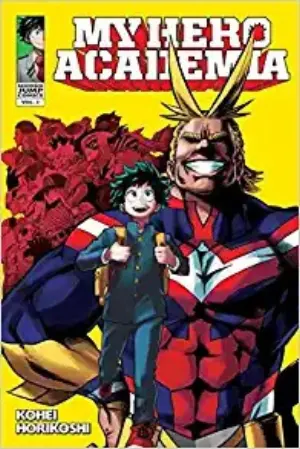
Kohei Horikoshi
A powerless boy gets a chance at a superhero school.
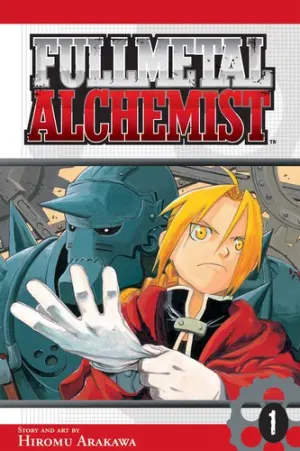
Hiromu Arakawa
Two brothers seek a way to restore their bodies.
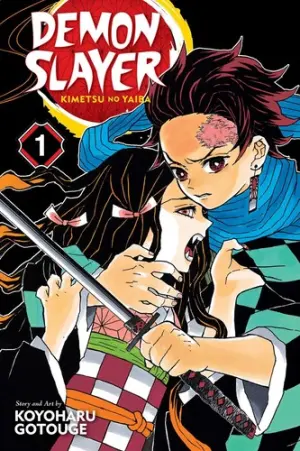
Koyoharu Gotouge
A boy becomes a demon slayer to save his sister.

Riichiro Inagaki, Boichi
A science-minded teen rebuilds civilization.

Haruichi Furudate
A short volleyball player aims high.

Kanehito Yamada, Tsukasa Abe
An elf mage reflects after the hero party disbands.
Amazon links are affiliate links; we may earn a commission on qualifying purchases at no extra cost to you. We show no prices or ratings.
From right to left. Open the book from what Western readers think of as the back cover, so the spine is on your right. On each page start at the top-right panel and move left, then down to the next row. Speech bubbles are read the same way. English editions keep this layout so the art is not mirrored.
Japanese is written and read from right to left, so manga is bound and read that way. Publishers keep the original orientation so the artists’ layouts work as drawn. What you would call the back cover is the front, and the last page is the first. It is not backwards, just the other direction.
Start with the top-right panel and move across the row to the left. Then go to the row below and repeat, again from right to left. If a tall panel spans several rows, read it where it starts, then continue with the neighbor to its left. The diagram above shows the path.
A chapter is one installment that first appeared in a magazine or on a website. A volume, also called a tankobon, is a paperback that collects several chapters. The number of chapters in a volume and the number of volumes in a series vary from one series to the next, so check the listing.
Choose a genre you already like and start with volume 1. One Piece, Spy x Family, My Hero Academia, Fullmetal Alchemist and Demon Slayer are popular first series. Check the age rating printed on the cover. If you enjoy volume 1, buy the next two or three before you commit to a long run.
Some of it. Publishers print an age rating on each book, such as All Ages, Teen or Mature, so check it. We keep most manga in our teen band or above, with a few early picks for younger readers. Read the description and look at a few pages before buying for a child.